

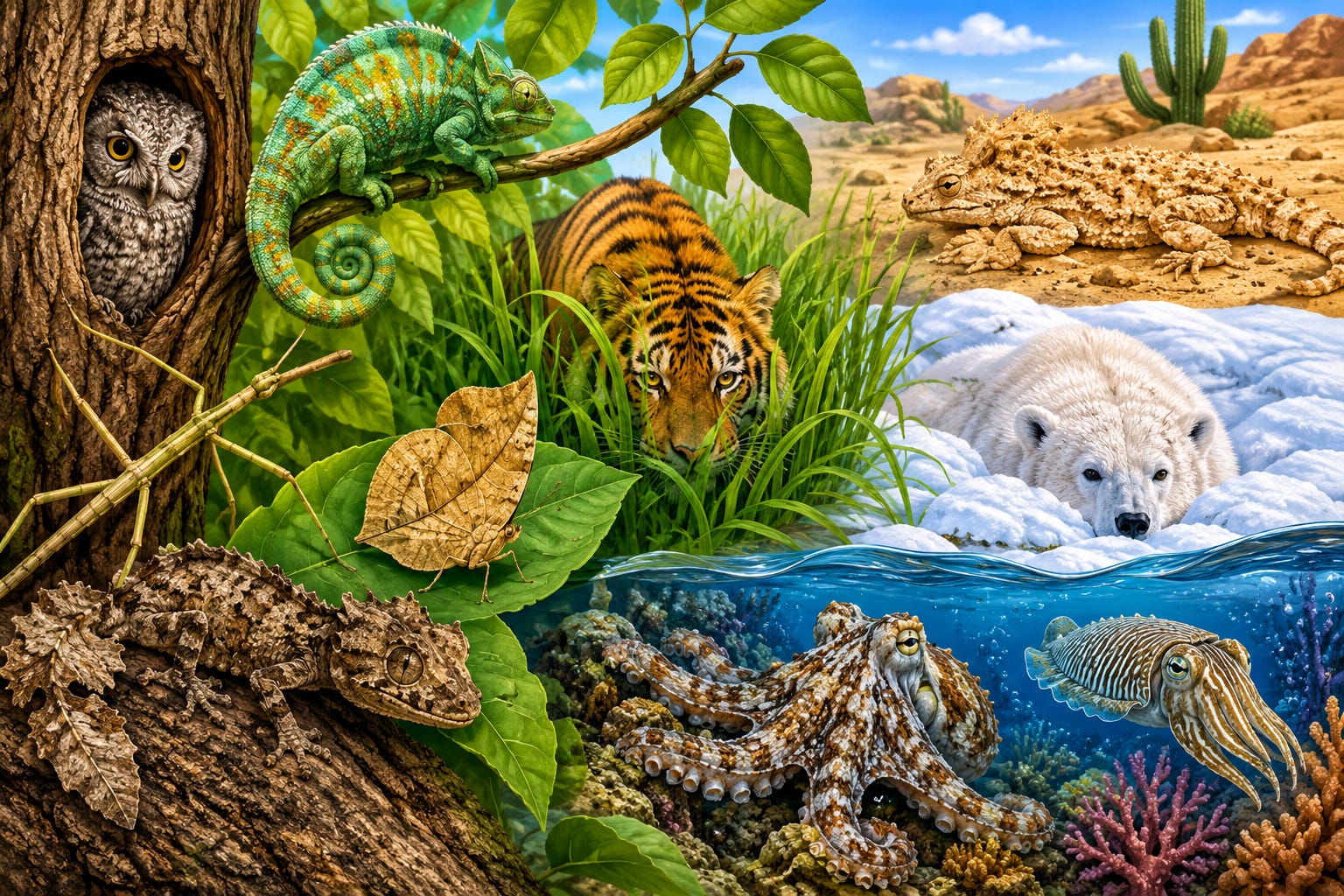
Have you ever played hide-and-seek and found the perfect hiding spot? Now imagine being so good at hiding that you almost disappear! That’s exactly what many animals do using a clever trick called camouflage.
Camouflage helps animals blend into their surroundings, making them difficult to spot. Some use it to stay safe from predators, while others use it to sneak up on their prey. It’s one of nature’s smartest survival skills!
What Is Camouflage?
Camouflage is a way animals use their colors, patterns, shapes, or even behaviors to blend into their environment.
When an animal is camouflaged, it can look just like leaves, tree bark, rocks, snow, sand, or even flowers!
Think of camouflage as nature’s invisible cloak.
Why Do Animals Use Camouflage?
Animals use camouflage for many reasons.
To Stay Safe
Many small animals hide from predators by blending into their surroundings.
For example:
A rabbit stays still in dry grass.
A stick insect looks exactly like a twig.
A snowshoe hare turns white during winter.
To Catch Food
Some predators use camouflage to surprise their prey.
For example:
Tigers hide among tall grass with their stripes.
Crocodiles wait quietly in muddy water.
Leaf-tailed geckos disappear against tree bark before catching insects.
Different Types of Camouflage
1. Color Camouflage
Animals have colors that match where they live.
Examples:
Green grasshopper
Polar bear
Sand-colored camel
2. Pattern Camouflage
Stripes, spots, and patches help animals blend in.
Examples:
Tiger stripes
Leopard spots
Owl feathers
These patterns break up the animal’s outline, making it harder to notice.
3. Shape Camouflage
Some animals look like objects found in nature.
Examples:
Stick insect
Leaf insect
Dead leaf butterfly
At first glance, they don’t even look like animals!
4. Changing Camouflage
Some amazing animals can change their color!
Examples:
Chameleons
Octopuses
Cuttlefish
These incredible creatures change colors to hide, communicate, or even show their mood.
Amazing Camouflage Champions
Zebra
A zebra’s stripes may seem easy to spot, but when many zebras stand together, their stripes confuse predators like lions.
Tiger
A tiger’s orange-and-black stripes blend perfectly with tall grass and forest shadows.
Polar Bear
Its white fur helps it disappear into snowy landscapes while hunting seals.
Stick Insect
It looks almost exactly like a twig, making it nearly impossible for birds to find.
Octopus
The octopus can change both its color and skin texture in just seconds!
Owl
Many owls have feathers that look just like tree bark, helping them hide during the daytime.
Can Humans Use Camouflage?
Yes!
People use camouflage too.
Soldiers wear camouflage uniforms.
Wildlife photographers wear camouflage clothing.
Hunters may wear camouflage to stay hidden.
Scientists studying animals also use camouflage tents.
Did You Know?
An octopus can change color in less than a second.
A leaf-tailed gecko looks so much like a dead leaf that even experts sometimes miss it.
Some butterflies look exactly like dry leaves when they close their wings.
Cuttlefish are among the fastest color-changing animals on Earth.
The Arctic fox grows a white coat in winter and a brown coat in summer.
Words to Know
Camouflage: Blending into the surroundings to stay hidden.
Predator: An animal that hunts other animals for food.
Prey: An animal that is hunted by another animal.
Habitat: The natural home of an animal or plant.
Mimicry: Looking or acting like another animal or object for protection.
Next time you’re outside, look carefully at trees, leaves, rocks, and flowers. Can you spot an insect or animal that’s hiding in plain sight? You might discover that nature’s best hide-and-seek players are all around you!
Free Camouflage Worksheet
Want to help your child remember what they learned?
I’ve created a free printable Camouflage Worksheet filled with fun activities, matching exercises, and drawing challenges.

🖨️ Print it at home for a screen-free learning activity.
📄 Download the PDF and let your child complete it at their own pace.
I’d love to see your child’s finished worksheet! Feel free to share a photo in the comments or tag us on social media.