

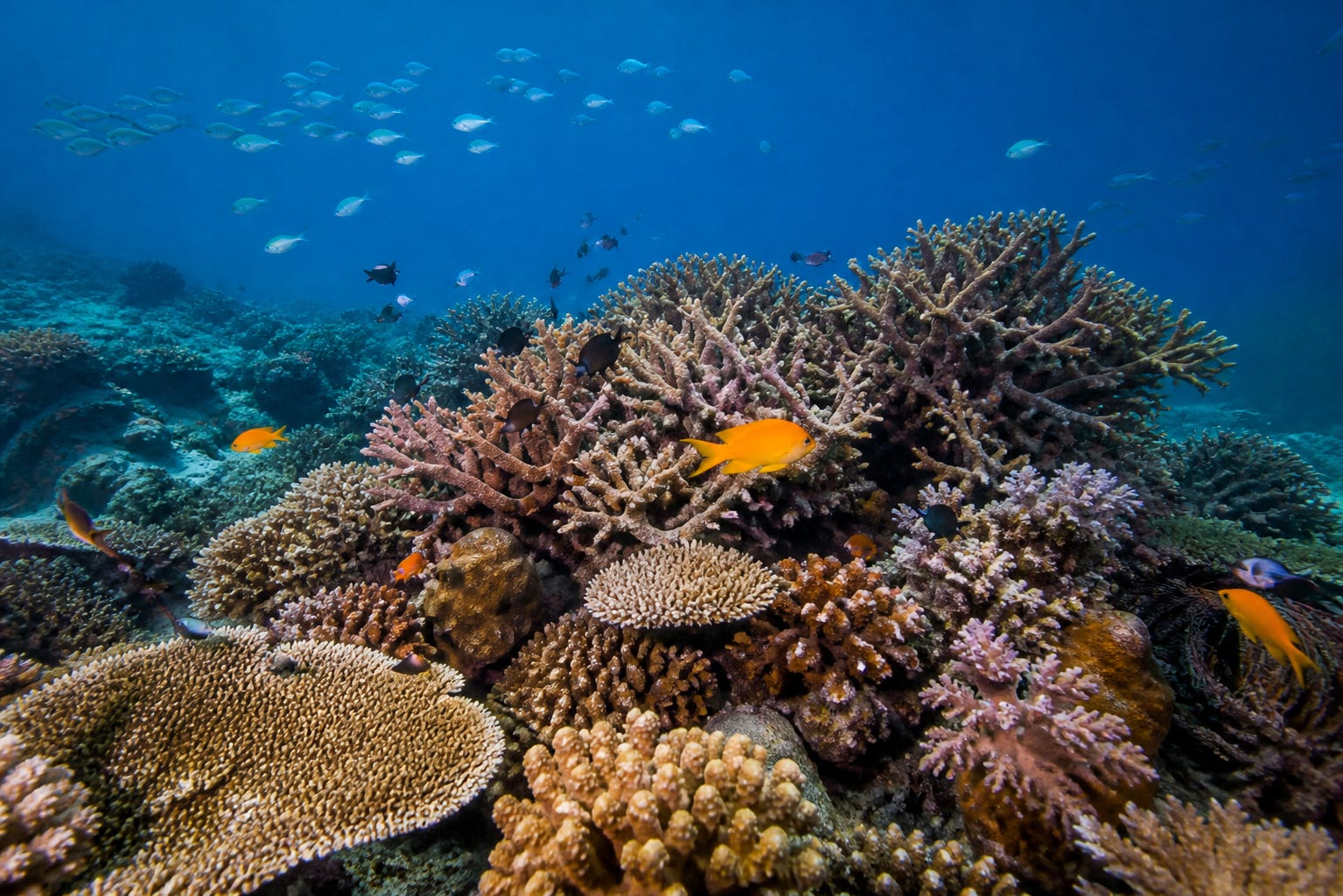
Imagine diving into the ocean and discovering a magical world full of bright colors, wavy shapes, and thousands of sea creatures swimming around. It almost looks like an underwater garden or a busy city. This amazing place is called a coral reef, and it is built by tiny living animals called corals!
What Exactly Are Corals?
At first glance, corals might look like rocks, plants, or even colorful decorations. But here’s the surprising truth—corals are animals!
Each coral is made up of tiny creatures called polyps. These polyps are soft, tube-shaped animals with a mouth surrounded by tiny tentacles. They use these tentacles to catch food floating in the water.
Even though one polyp is very small, thousands (sometimes millions!) of them live together in groups called colonies. Over time, these colonies build hard skeletons made of calcium, which form the strong structures we see as coral reefs.
What Is a Coral Reef?
A coral reef is like a huge underwater city built by corals over many, many years. Just like a city has houses, roads, and people, coral reefs have:
Fish swimming everywhere
Crabs hiding in tiny spaces
Sea turtles gliding peacefully
Octopuses changing colors and shapes
Even though they cover less than 1% of the ocean floor, they support about 25% of all marine life!
Why Are Corals So Bright and Colorful?
The beautiful colors of corals come from tiny living organisms called algae that live inside them. These algae are super helpful!
They use sunlight to make food (like plants do)
They share this food with the corals
In return, corals give them a safe place to live
This teamwork is called a symbiotic relationship—which means both sides help each other survive.
Why Are Corals So Important?
Corals are not just beautiful to look at—they play a very important role in keeping our planet healthy. Coral reefs provide homes for thousands of marine animals, giving them food, shelter, and protection. They also act like natural barriers, shielding coastlines from strong waves, storms, and floods. Scientists study corals to create medicines that can help treat different diseases, making them valuable for human health too. Most importantly, corals help keep the ocean ecosystem balanced and full of life, supporting countless creatures that depend on them.
What Is Coral Bleaching?
Corals are very sensitive to changes in their environment.
When the ocean becomes too warm or polluted, corals get stressed and push out the helpful algae living inside them. Without algae, they lose their color and turn white. This is called coral bleaching.
If the stress continues, the coral may not survive.
What Causes Coral Bleaching?
Rising ocean temperatures (global warming)
Pollution from plastic and chemicals
Oil spills
Overfishing
Even small changes can have a big impact on these delicate creatures.
Every small action helps protect these amazing underwater worlds.
Fun Facts About Corals!
Some coral reefs are over 5,000 years old!
The largest coral reef in the world is the Great Barrier Reef
Corals grow very slowly—only a few centimeters each year
Some corals glow in the dark (bioluminescence)
Even though corals are tiny, they build some of the biggest and most important ecosystems on Earth. They are like little architects, working day and night to create homes for thousands of sea creatures.
But they need our help to survive.
Coral reefs are like magical underwater cities full of life, color, and wonder. By learning about them and protecting our environment, we can make sure these beautiful places stay safe for future generations.
So next time you think about the ocean, remember—tiny corals are building a giant world beneath the waves!