

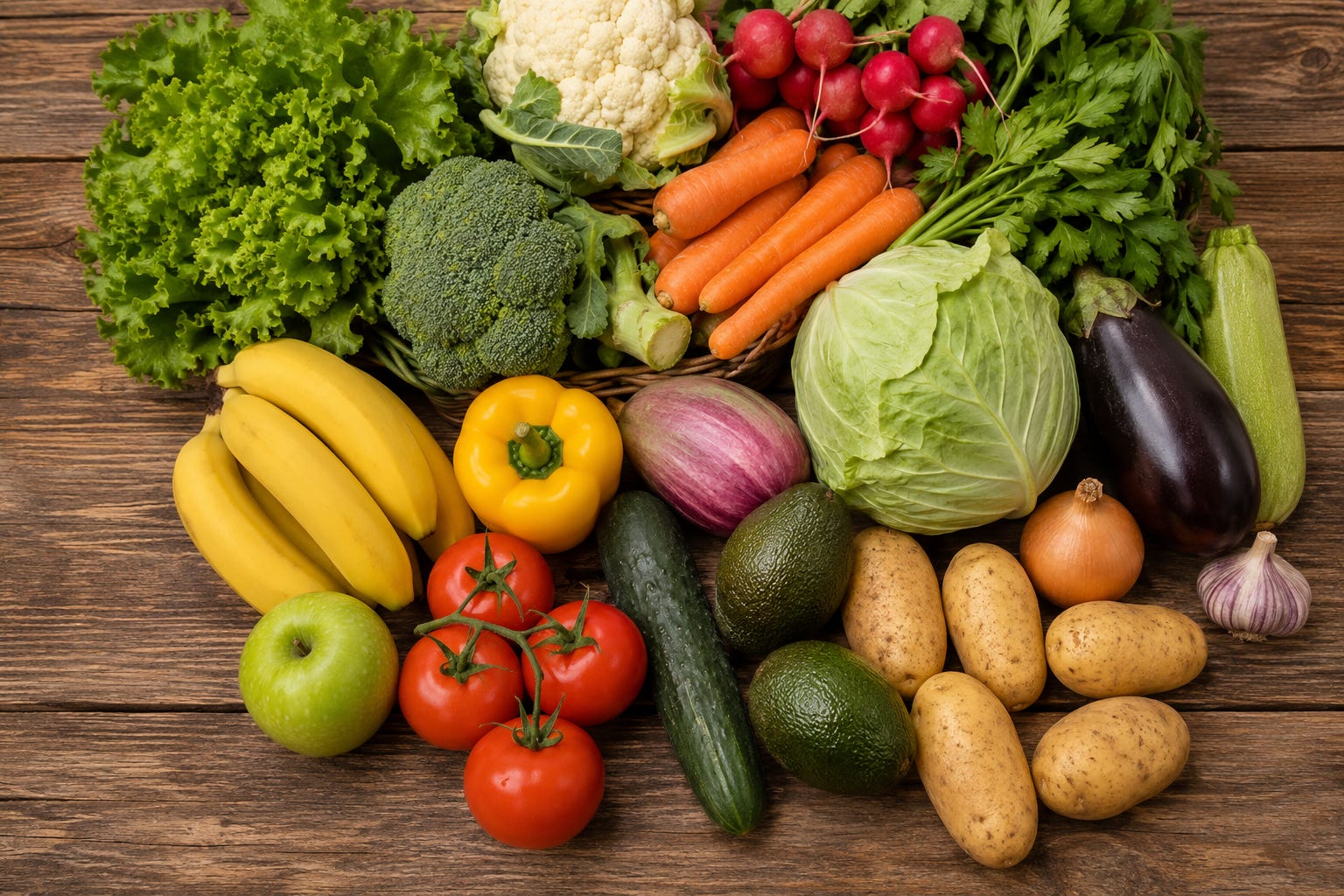
Walk through any grocery store, and you’ll find fruits and vegetables sitting side by side. We eat them every day in salads, sandwiches, soups, smoothies, and snacks. But have you ever stopped to wonder what actually makes a fruit a fruit and a vegetable a vegetable?
Many people think the answer is simple: fruits are sweet, and vegetables are not. While that may seem true for many foods, it’s not the real scientific difference. In fact, some foods that we call vegetables are actually fruits!
Let’s uncover the fascinating truth behind fruits and vegetables.
The Scientific Definition of a Fruit
In botany (the study of plants), a fruit is the part of a flowering plant that develops from the flower’s ovary and contains seeds.
After a flower is pollinated, the ovary grows and matures into a fruit. The fruit protects the seeds and helps spread them so new plants can grow.
Think of fruits as nature’s way of helping plants reproduce.
Common Fruits
Some familiar fruits include:
Apples, Bananas, Mangoes, Oranges, Grapes, Strawberries, Watermelons, Peaches
Each of these fruits contains seeds, even if the seeds are tiny or not easily noticeable.
The Scientific Definition of a Vegetable
A vegetable is any edible part of a plant that is not classified as a fruit.
Vegetables can come from many different parts of a plant, including:
Roots, Stems, Leaves, Flowers, Bulbs
Unlike fruits, vegetables do not develop from the flower’s ovary.
Different Types of Vegetables
Root Vegetables
These grow underground and store nutrients for the plant.
Examples:
Carrots, Beets, Radishes, Turnips
Leafy Vegetables
These are the leaves of the plant.
Examples:
Spinach, Lettuce, Kale, Cabbage
Stem Vegetables
These are the plant’s stems.
Examples:
Celery, Asparagus
Flower Vegetables
These are the flower buds of a plant.
Examples:
Broccoli, Cauliflower, Artichokes
Bulb Vegetables
These grow underground as bulb-shaped structures.
Examples:
Onions, Garlic
Why Are Some “Vegetables” Actually Fruits?
This is where things get interesting!
Many foods that people call vegetables are scientifically fruits because they grow from flowers and contain seeds.
Tomato
Most people think of tomatoes as vegetables because they are used in salads, sauces, and savory dishes.
However, tomatoes grow from flowers and contain seeds, making them fruits.
Cucumber
Cucumbers develop from flowers and contain seeds, so they are fruits too.
Bell Pepper
Bell peppers contain seeds and grow from flowering plants, which means they are fruits.
Pumpkin
Pumpkins develop from flowers and are packed with seeds, making them fruits.
Eggplant
Eggplants also qualify as fruits because they grow from flowers and contain seeds.
The Difference Between Science and Cooking
Scientists and cooks often classify foods differently.
In Science
Foods are classified according to the part of the plant they come from.
In Cooking
Foods are classified based on flavor and how they are used.
Generally:
Fruits are sweet or tart and are often used in desserts, juices, and snacks.
Vegetables are usually savory and used in soups, salads, and main dishes.
That’s why tomatoes are considered vegetables in many recipes even though they are fruits scientifically.
Why Should We Eat Both?
Whether a food is a fruit or a vegetable, both are important for good health.
They provide:
Vitamins
Vitamins help our bodies grow, heal, and stay healthy.
Minerals
Minerals support strong bones, muscles, and organs.
Fiber
Fiber helps digestion and keeps our digestive system working properly.
Antioxidants
These special compounds help protect our cells from damage.
Eating a variety of fruits and vegetables gives your body many different nutrients.
Fun Facts
Tomatoes are fruits, not vegetables.
Cucumbers are fruits too.
Pumpkins belong to the fruit family.
Broccoli is actually an unopened flower.
Carrots were originally purple before orange varieties became popular.
Strawberries are unusual because their seeds are on the outside.
Corn is considered both a grain and a vegetable, depending on when it is harvested.
Conclusion
The difference between fruits and vegetables isn’t based on how they taste—it’s based on plant science. Fruits develop from flowers and contain seeds, while vegetables come from other parts of the plant such as roots, stems, leaves, and flowers.
This means that tomatoes, cucumbers, peppers, and pumpkins are actually fruits, even though we often use them like vegetables in cooking.
Whether you’re enjoying a sweet mango, a crunchy carrot, or a juicy tomato, both fruits and vegetables are packed with nutrients that help keep you healthy. So the next time you eat a colorful meal, remember that nature has filled it with amazing foods that are both delicious and beneficial!
Free Fruit or Vegetable? Worksheet
Want to help your child remember what they learned?
I’ve created a free printable Fruit or Vegetable? Worksheet filled with fun activities, matching exercises, and drawing challenges.

🖨️ Print it at home for a screen-free learning activity.
📄 Download the PDF and let your child complete it at their own pace.
I’d love to see your child’s finished worksheet! Feel free to share a photo in the comments or tag us on social media.
Learning science is more fun with a quiz! Test your knowledge with our fun Planets Quiz on YouTube and see if you can score 10/10!
Watch here: