

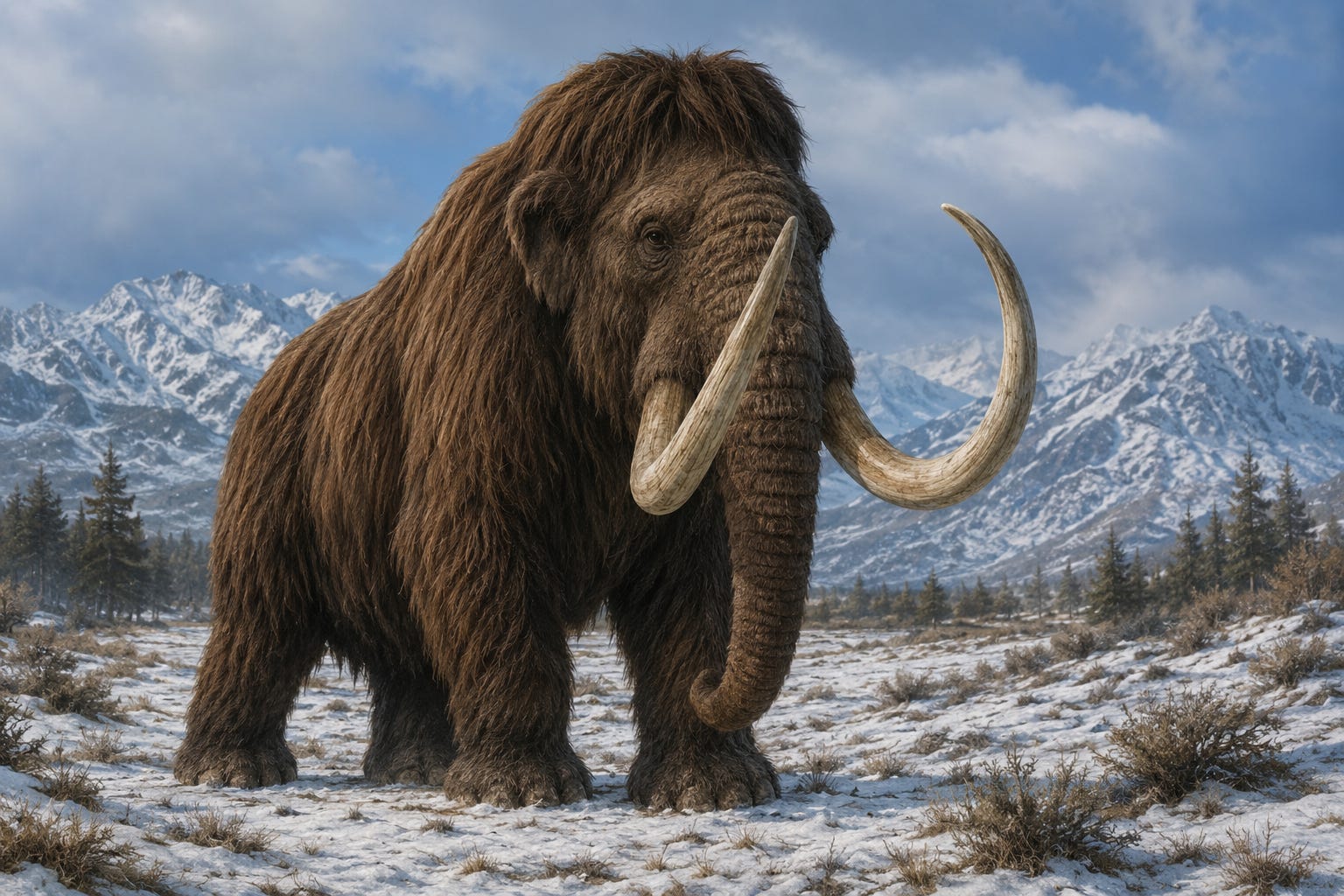
Imagine seeing an animal as big as an elephant, covered in thick fur, with huge curved tusks walking across snowy lands. These amazing creatures were mammoths, one of the most famous animals from the Ice Age!
What Were Mammoths?
Mammoths were large relatives of modern elephants that lived thousands of years ago. They first appeared about 5 million years ago and lived in many parts of the world. The most well-known species is the Woolly Mammoth, famous for its long fur and ability to survive in freezing temperatures.
Mammoths roamed Earth during the Ice Age when much of the planet was colder than it is today.
What Did Mammoths Look Like?
Mammoths had special features that helped them survive in cold environments:
Long shaggy fur – kept them warm in icy weather
Huge curved tusks – used for digging through snow, fighting, and protection
Thick fat layers – worked like natural insulation
Smaller ears – helped reduce heat loss
Large bodies – some were taller than modern elephants
Their appearance made them perfectly suited for life in freezing conditions.
How Big Were Mammoths?
Mammoths were enormous animals. Some species grew up to:
4 meters (13 feet) tall
6–8 tons in weight
That means a mammoth could weigh as much as several cars combined!
What Did Mammoths Eat?
Mammoths were herbivores, meaning they only ate plants. Their diet included:
Grass, Leaves, Shrubs, Small plants and flowers
Scientists believe mammoths spent many hours each day searching for food.
Where Did Mammoths Live?
Mammoths lived across many cold regions of the world, including:
North America, Europe, Asia, Siberia, Arctic regions
They often lived in open grasslands called mammoth steppes, where food was easier to find.
Did Humans Ever See Mammoths?
Yes! Early humans and mammoths lived at the same time. Ancient people hunted mammoths for food, clothing, and tools. Mammoth bones and tusks were sometimes used to build shelters.
Scientists have even discovered cave paintings made by early humans showing mammoths.
Why Did Mammoths Become Extinct?
Scientists think mammoths disappeared because of several reasons:
Climate change – Earth became warmer after the Ice Age
Loss of habitat – their food sources changed
Human hunting – early humans hunted mammoths
A combination of these factors may have led to their extinction.
Amazing Mammoth Facts!
⭐ Some mammoths survived until around 4,000 years ago—while humans were already building ancient civilizations.
⭐ Frozen mammoths have been found preserved in ice, with fur and skin still attached.
⭐ Mammoths are relatives of modern elephants.
⭐ Scientists are studying mammoth DNA to learn more about extinct animals.
Mammoths may be extinct, but they continue to fascinate scientists and animal lovers around the world. These giant Ice Age creatures teach us about Earth’s history, climate change, and how animals adapt to survive.
The next time you see an elephant, imagine a furry version with giant curved tusks walking through snow—that’s what a mammoth looked like!