

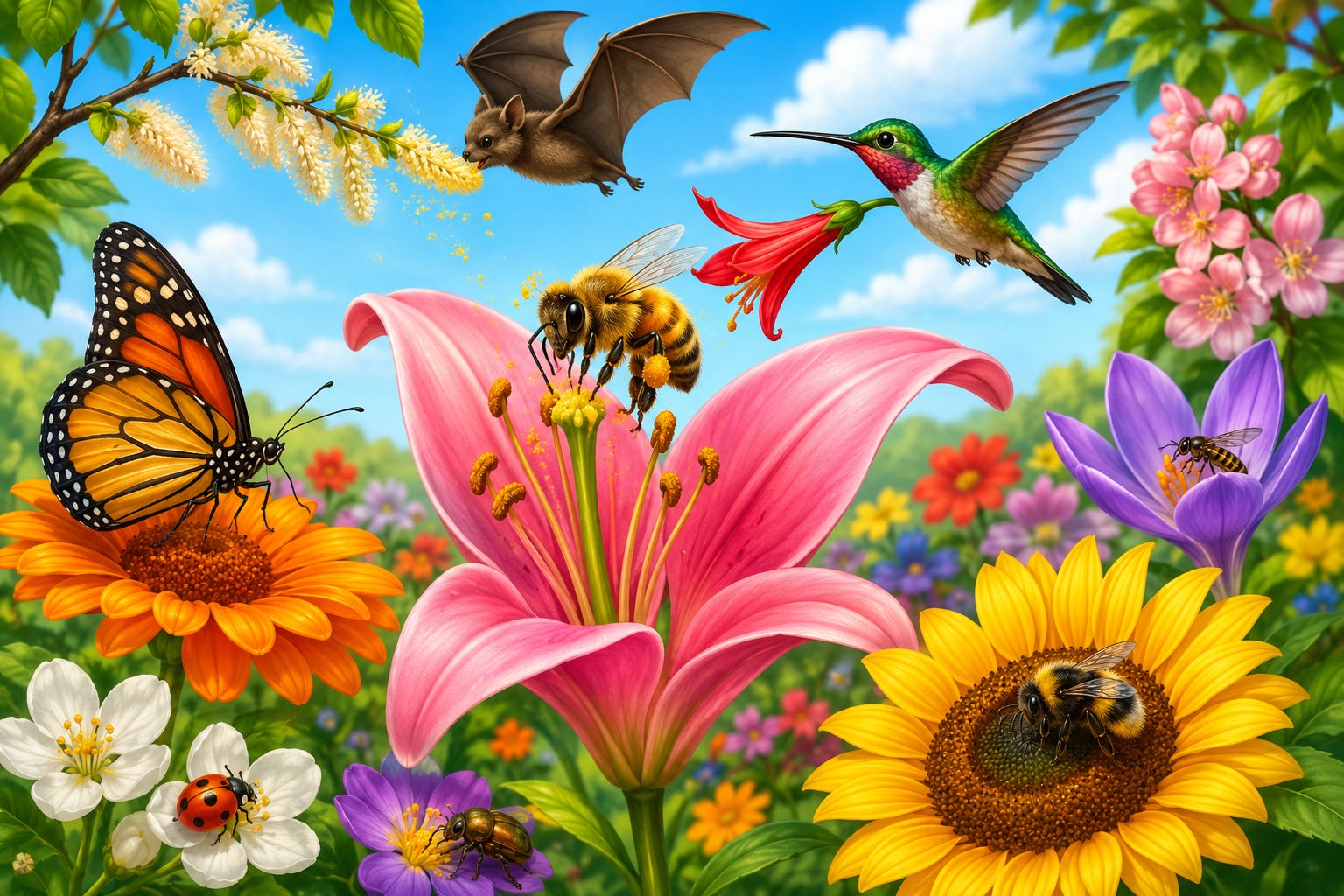
Have you ever wondered how an apple tree grows apples or how a sunflower makes seeds? The answer is pollination!
Pollination is one of nature’s most important jobs. Without it, many plants couldn’t make fruits, vegetables, or seeds. Every day, tiny helpers like bees and butterflies fly from flower to flower, helping plants grow. They don’t even know they’re doing such an important job!
Let’s discover how this amazing process works.
What Is Pollination?
Pollination is the process of moving pollen from the male part of a flower (called the anther) to the female part (called the stigma) of the same flower or another flower of the same kind.
When pollen reaches the stigma, the flower can make seeds. Later, these seeds may grow into new plants.
Think of pollen as a special powder that helps plants have “baby plants.”
What Is Pollen?
Pollen is a tiny yellow, orange, or sometimes white powder found inside flowers.
It is so tiny that you may not even notice it, but millions of pollen grains are made by flowers every year.
Sometimes pollen sticks to your fingers when you touch a flower!
Why Is Pollination Important?
Pollination helps plants:
Produce fruits
Grow vegetables
Make seeds
Create new plants
Feed animals and people
Without pollination, many of our favorite foods would disappear!
About three out of every four flowering plants and many food crops depend on animal pollinators or other forms of pollination.
Who Are the Pollinators?
Pollinators are living things that carry pollen from one flower to another.
Bees
Bees are the world’s best pollinators.
As they collect sweet nectar, pollen sticks to their fuzzy bodies. When they visit another flower, some of the pollen rubs off.
One bee may visit hundreds of flowers in a single day!
Butterflies
Butterflies use their long straw-like tongue to drink nectar.
While feeding, pollen sticks to their legs and wings.
They help pollinate many colorful flowers.
Birds
Some birds, such as hummingbirds, drink nectar using their long beaks.
Their heads pick up pollen, which is carried to the next flower.
Bats
Many flowers open only at night.
Bats visit these flowers and spread pollen while feeding on nectar.
They help pollinate plants like bananas, mangoes, and some cactus species.
Other Helpful Pollinators
Many other animals help too:
Beetles
Moths
Flies
Wasps
Even tiny insects play a big role in nature.
Pollination Without Animals
Not all plants need insects or animals.
Some plants use:
Wind Pollination
The wind blows light pollen from one flower to another.
Plants like wheat, rice, corn, and many grasses use the wind.
Water Pollination
A few water plants let pollen float on the water until it reaches another flower.
This is less common but still amazing!
Why Do Pollinators Visit Flowers?
Flowers offer a sweet drink called nectar.
Animals visit flowers to drink nectar or collect pollen for food.
While they enjoy their meal, they accidentally help the flower.
It’s a perfect example of teamwork—both the flower and the pollinator benefit!
Fun Facts
A single bee can visit over 2,000 flowers in one day.
Bees can see ultraviolet patterns on flowers that humans cannot see.
Some orchids look like insects to attract pollinators.
Vanilla flowers are pollinated by specific bees in the wild.
Chocolate comes from cacao trees, whose tiny flowers need tiny insects for pollination.
Around 35% of the world’s food crops benefit from animal pollination.
Did You Know?
If there were no pollinators, grocery stores would have far fewer fruits, vegetables, and nuts!
Tiny insects help fill our plates every single day.
Pollination is one of nature’s greatest partnerships. Flowers provide nectar, and pollinators carry pollen from one flower to another. Thanks to this teamwork, plants can produce seeds, fruits, and vegetables that feed people and animals around the world.
The next time you see a bee buzzing or a butterfly fluttering among flowers, remember—you are watching one of nature’s most important jobs in action!
Free Pollination Worksheet
Want to help your child remember what they learned?
I’ve created a free printable Pollination Worksheet filled with fun activities, matching exercises, and drawing challenges.

🖨️ Print it at home for a screen-free learning activity.
📄 Download the PDF and let your child complete it at their own pace.
I’d love to see your child’s finished worksheet! Feel free to share a photo in the comments or tag us on social media.