

Have you ever switched on a light, watched television, charged a phone, or traveled in a car? All these activities need energy. Energy is what makes things work and helps us perform daily tasks. But where does this energy come from?
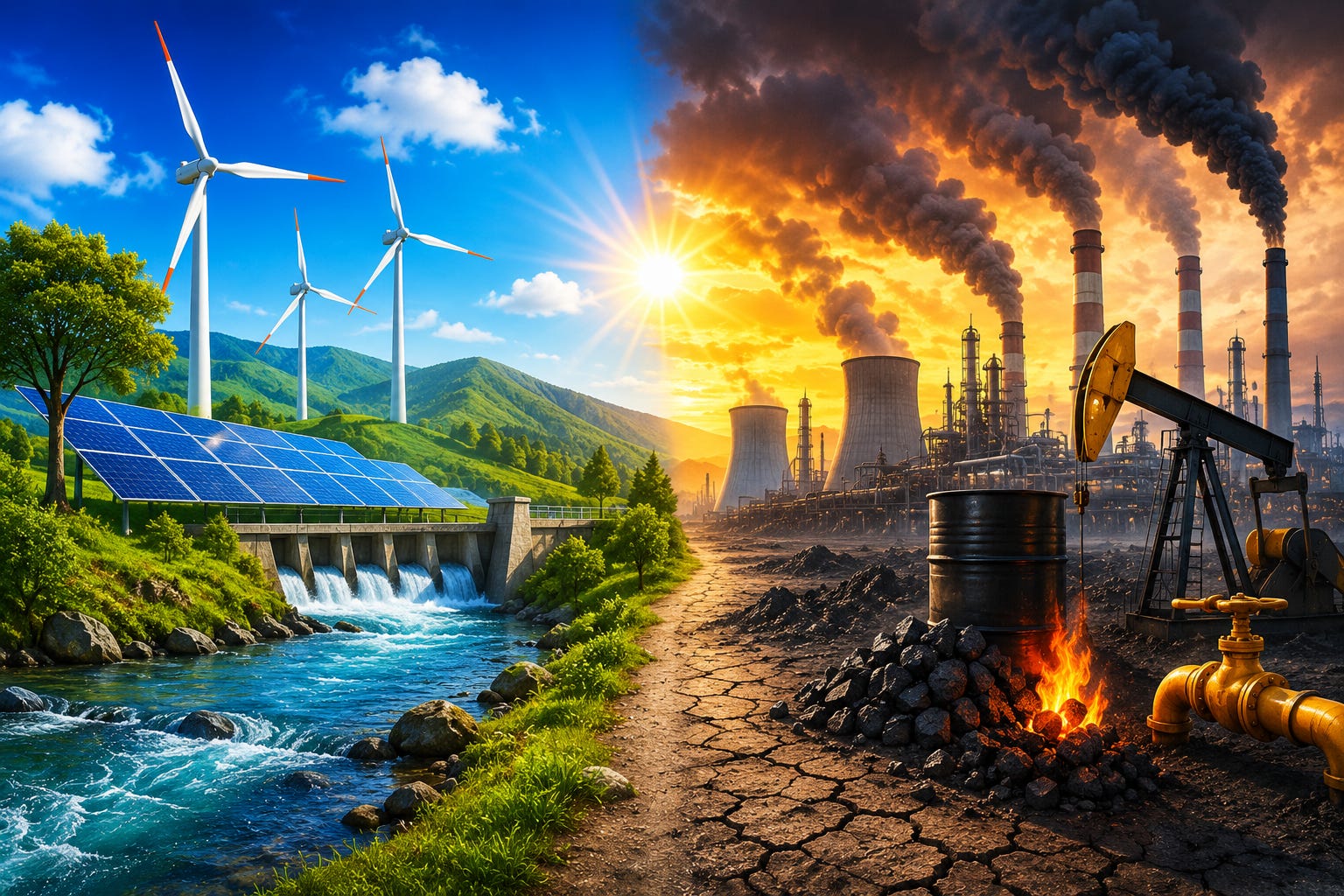
The energy we use comes from different sources, and these sources are divided into two main categories: renewable energy and non-renewable energy. Understanding the difference between them helps us make better choices for our planet and our future.
What Is Energy?
Energy is the ability to do work or cause change. It helps plants grow, powers machines, heats our homes, and keeps our cities running. Humans have been using energy for thousands of years, from burning wood for heat to using electricity for modern technology.
What Is Renewable Energy?
Renewable energy comes from natural sources that are constantly being replenished. This means they can be used again and again without running out.
Nature continuously provides these energy sources, making them a sustainable option for the future.
Types of Renewable Energy
Solar Energy
Solar energy comes from the Sun. Solar panels capture sunlight and convert it into electricity that can power homes, schools, and businesses.
Interesting Fact: The Sun provides Earth with more energy in one hour than humanity uses in an entire year!
Wind Energy
Wind energy is produced by moving air. Large wind turbines spin when the wind blows, generating electricity.
Wind farms can be found on land and even offshore in oceans.
Hydropower
Hydropower uses flowing water to generate electricity. Dams are often built on rivers to control water flow and produce power.
Hydropower is one of the oldest and most widely used renewable energy sources.
Biomass Energy
Biomass energy comes from plants, crops, wood, and organic waste. These materials can be burned or processed to create energy.
Because new plants can be grown, biomass is considered renewable.
Geothermal Energy
Deep inside the Earth, there is a tremendous amount of heat. Geothermal power plants use this heat to generate electricity and provide heating.
This energy source works day and night and is available all year round.
Benefits of Renewable Energy
Renewable energy offers many advantages:
It will not run out.
It produces little or no pollution.
It helps reduce greenhouse gases.
It protects natural resources.
It creates jobs in clean energy industries.
It helps countries become less dependent on fossil fuels.
Because of these benefits, many countries are investing heavily in renewable energy projects.
What Is Non-Renewable Energy?
Non-renewable energy comes from resources that take millions of years to form beneath the Earth’s surface. Once these resources are used up, they cannot be replaced within a human lifetime.
Most non-renewable energy sources are known as fossil fuels because they are formed from the remains of ancient plants and animals.
Types of Non-Renewable Energy
Coal
Coal is a black rock that is burned to produce electricity and heat.
Although coal has powered industries for centuries, it releases large amounts of pollution when burned.
Oil (Petroleum)
Oil is used to make fuels such as gasoline, diesel, and jet fuel. It is also used to make plastics and many everyday products.
Oil is extracted from underground reservoirs beneath land and oceans.
Natural Gas
Natural gas is commonly used for cooking, heating homes, and generating electricity.
It burns cleaner than coal but still releases greenhouse gases into the atmosphere.
Nuclear Energy
Nuclear power uses uranium, a mineral found in rocks. Nuclear power plants generate large amounts of electricity from small amounts of fuel.
Although nuclear energy produces very little air pollution, radioactive waste must be carefully managed.
Problems with Non-Renewable Energy
While non-renewable energy has helped power modern civilization, it has some drawbacks:
Supplies are limited and will eventually run out.
Mining and drilling can damage ecosystems.
Burning fossil fuels causes air pollution.
Greenhouse gases contribute to global warming and climate change.
Extraction and transportation can lead to environmental accidents.
These concerns have encouraged scientists and governments to search for cleaner alternatives.
Why Is Renewable Energy the Future?
The world’s population continues to grow, and so does the demand for energy. Renewable energy provides a cleaner and more sustainable way to meet this demand.
Many countries are building solar farms, wind farms, and hydroelectric plants. Electric vehicles, energy-efficient buildings, and new technologies are also helping reduce our dependence on fossil fuels.
By choosing renewable energy, we can help protect the environment and ensure that future generations have access to clean and reliable power.
How Can you Help Save Energy?
Everyone can make a difference!
Turn off lights when leaving a room.
Unplug chargers when not in use.
Use natural sunlight during the day.
Walk or ride a bicycle when possible.
Recycle and reduce waste.
Learn about renewable energy and share what you know.
Small actions can add up to big changes.
Fun Facts About Energy
A single wind turbine can power hundreds of homes.
Solar panels can work even on cloudy days.
Hydropower generates about one-sixth of the world’s electricity.
The Earth contains enough geothermal energy to power human civilization for thousands of years.
Wind is actually caused by the Sun heating different parts of the Earth unevenly.
Energy is essential for modern life, but the way we produce it matters. Renewable energy sources such as solar, wind, water, biomass, and geothermal energy are clean, sustainable, and environmentally friendly. Non-renewable energy sources like coal, oil, and natural gas have powered the world for many years, but they are limited and can harm the environment.
As technology advances, renewable energy will play an increasingly important role in creating a cleaner, healthier, and more sustainable future for everyone.