

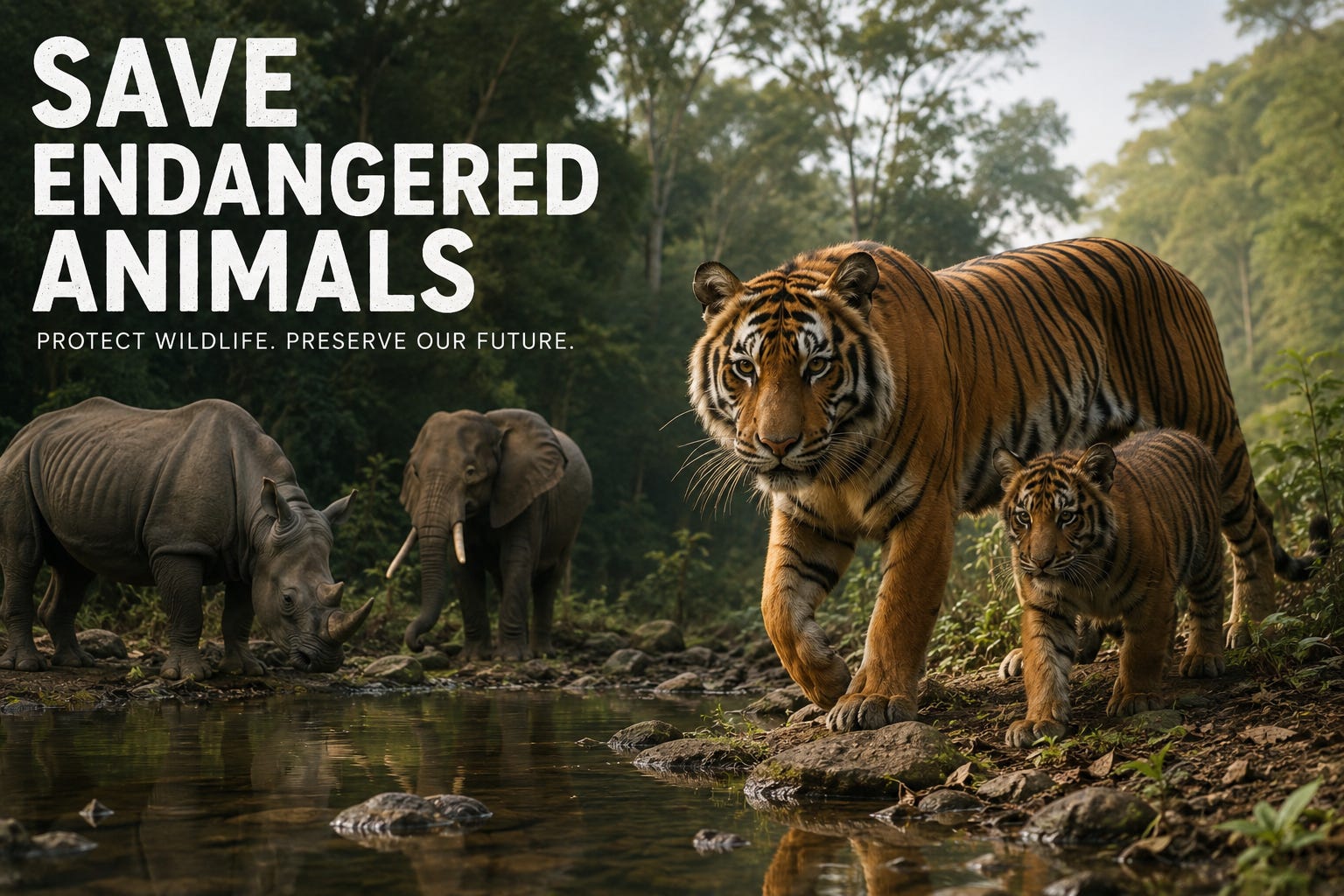
Across our planet, countless species of animals are quietly disappearing. From dense forests to deep oceans, wildlife is facing threats at an alarming rate. Protecting endangered animals is not just about saving individual species—it is about preserving the balance of life on Earth.
What Are Endangered Animals?
Endangered animals are species that are at serious risk of extinction, meaning they could disappear forever if no action is taken. Some well-known examples include the tiger, giant panda, and sea turtle.
Each of these animals plays a unique role in maintaining the health of their environment. When one species disappears, it can affect many others in ways we may not immediately see.
Why Are Species Becoming Endangered?
The main causes of endangerment are closely linked to human activity:
Habitat Loss:
Forests are being cleared for farming, cities, and industries. When animals lose their natural homes, they struggle to survive.
Pollution:
Air, water, and soil pollution harm animals directly and damage the ecosystems they depend on.
Poaching and Illegal Trade:
Many animals are hunted for their skin, bones, or other body parts, often illegally.
Climate Change:
Rising temperatures and changing weather patterns are altering habitats faster than animals can adapt.
Why Saving Endangered Animals Is Important
Every species is part of a complex web of life. Removing one thread can weaken the entire system.
Ecological Balance: Predators, prey, and plants all depend on each other.
Biodiversity: A rich variety of life makes ecosystems stronger and more resilient.
Human Impact: Healthy ecosystems provide clean air, water, and resources we rely on.
Protecting animals ultimately means protecting our own future.
Conservation Efforts Around the World
Many efforts are underway globally to protect endangered species:
Establishing protected areas like wildlife sanctuaries and national parks
Breeding programs to increase population numbers
Strict laws against hunting and illegal wildlife trade
Awareness campaigns led by organizations such as the World Wildlife Fund
These actions have already helped bring some species back from the brink of extinction.
What Can Individuals Do?
Protecting wildlife is not limited to governments and scientists. Individuals also play an important role:
Reduce, reuse, recycle to minimize waste and pollution
Support conservation organizations and eco-friendly initiatives
Spread awareness through conversations, social media, or writing
Make sustainable choices like reducing plastic use and conserving energy
Small, consistent actions can collectively lead to meaningful change.
A Shared Responsibility
The survival of endangered animals depends on the choices we make today. Every effort—no matter how small—contributes to a larger impact.
Protecting wildlife is not just an environmental issue; it is a shared responsibility that connects all of us. By acting now, we can ensure that future generations inherit a world rich in life, diversity, and natural beauty.