

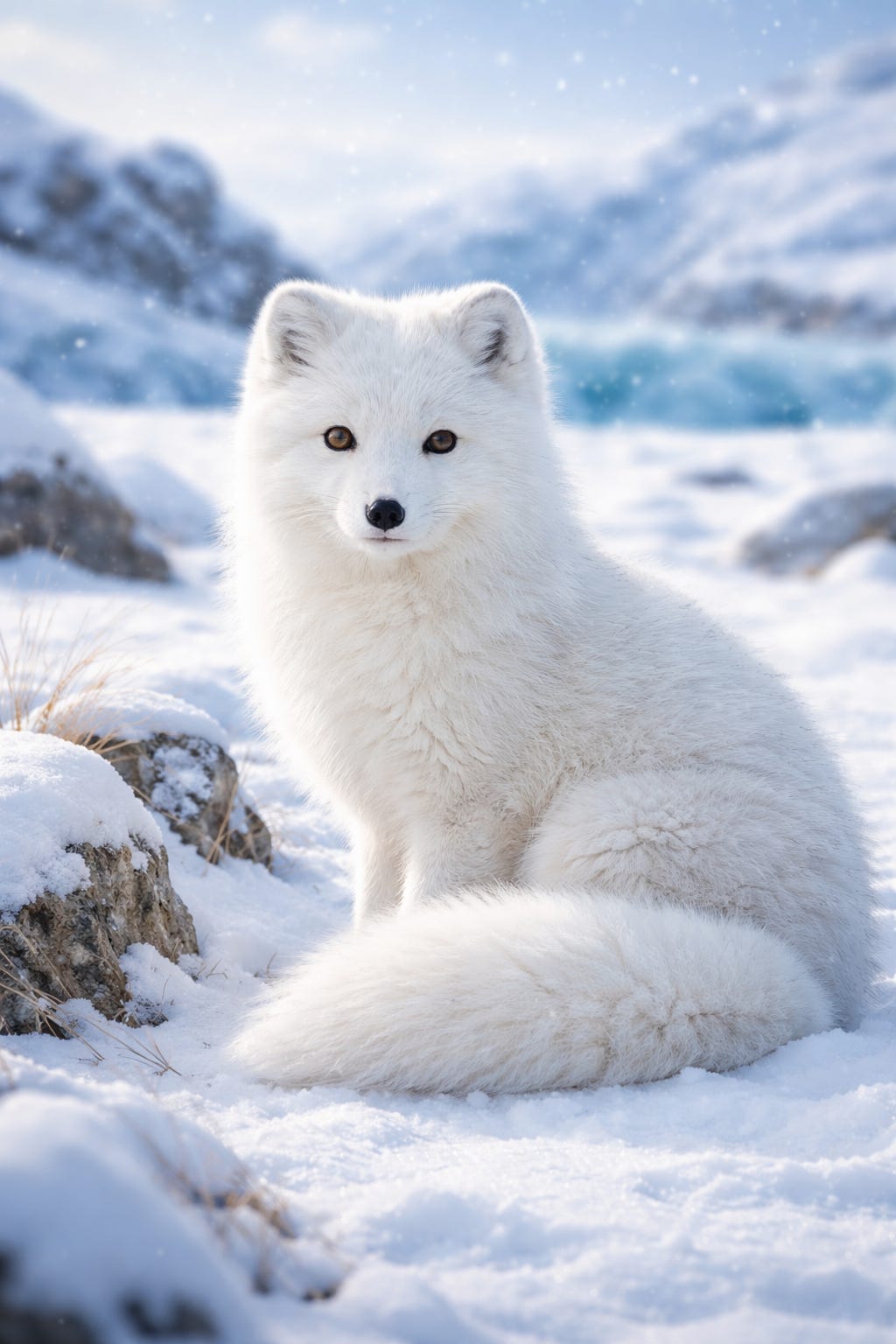
Have you ever wondered how animals survive in places that are freezing cold all year? Meet the Arctic fox, one of the toughest and cutest animals on Earth!
The Arctic fox (scientific name: Vulpes lagopus) lives in the icy region called the Arctic. This area is near the North Pole and is covered with snow and ice for most of the year. Temperatures here can drop to –50°C — that’s much colder than any freezer!
Built for the Cold
The Arctic fox is perfectly built to survive freezing temperatures. In winter, its fur turns white so it can blend in with the snow, and in summer, the fur changes to brown or grey to match the rocks and land. It has a thick, warm coat that keeps its body cozy even in –50°C weather. Even the bottoms of its feet are covered with fur to protect them from the icy ground. Its big, bushy tail also helps by wrapping around its body like a warm blanket when it sleeps.
The Arctic fox is an omnivore, which means it eats both plants and animals to survive in the harsh Arctic environment. Its favorite food is lemmings, which are small, mouse-like animals that live under the snow. When lemmings are hard to find, the Arctic fox also eats birds, eggs, fish, and even insects. During the short Arctic summer, it enjoys berries and other small plants. Sometimes, it follows larger animals like polar bears and eats the leftover scraps from their hunts. The Arctic fox is not a picky eater — it eats whatever food is available, which helps it survive in one of the coldest and toughest places on Earth.
Arctic Fox Families
Baby Arctic foxes are called kits. A mother fox can have 5 to 14 kits at one time. That’s a lot of tiny, fluffy babies! The family lives together in dens dug under the ground to stay safe and warm.
Fun and Interesting Facts
The Arctic fox has some truly amazing abilities that help it survive in the cold Arctic region. It has excellent hearing and can even hear small animals moving under thick layers of snow. Unlike many animals that sleep through the winter, the Arctic fox does not hibernate and stays active all year long. Its small, rounded ears help reduce heat loss and protect it from freezing winds. Arctic foxes are also strong travelers and can walk very long distances in search of food. Even though they look small and cute, they are strong, smart, and perfectly adapted to life in the icy Arctic.