

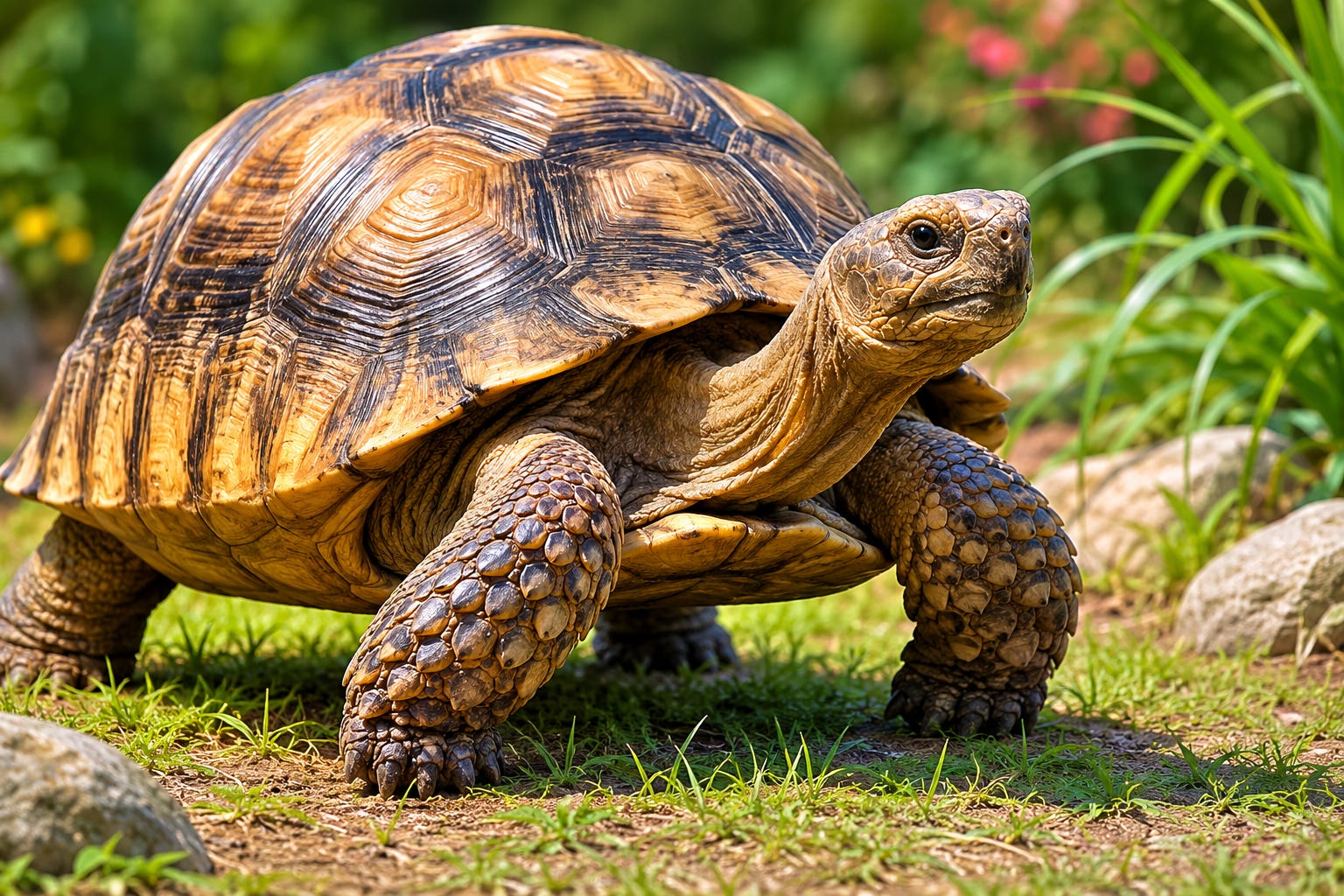
When people think of tortoises, they often imagine slow-moving animals carrying heavy shells on their backs. But tortoises are much more interesting than they seem! These gentle reptiles have lived on Earth for millions of years and are famous for their long lifespans and peaceful nature.
What Is a Tortoise?
A tortoise is a reptile that belongs to the turtle family, but unlike many turtles, tortoises live mainly on land. They have strong legs, sturdy feet, and large shells that help protect them from danger.
Tortoises are cold-blooded animals, which means their body temperature depends on the environment around them.
Where Do Tortoises Live?
Tortoises live in many parts of the world, including:
Dry deserts, Grasslands, Forests, Tropical islands
Different species have adapted to different habitats. Some tortoises live in hot, dry places, while others prefer greener environments.
Why Do Tortoises Have Shells?
A tortoise’s shell is one of its most special features. The shell works like natural armor and protects the tortoise from predators.
The shell is actually connected to the tortoise’s skeleton, meaning they cannot leave or remove it.
When frightened, many tortoises pull their heads and legs inside the shell for safety.
What Do Tortoises Eat?
Most tortoises are herbivores, meaning they mainly eat plants such as:
Grass, Leaves, Fruits, Flowers, Vegetables
Their diet helps them stay healthy and supports their slow-growing bodies.
Why Are Tortoises So Slow?
Tortoises move slowly because they carry heavy shells and have bodies designed for steady walking rather than speed. Their slow movement also helps conserve energy.
Even though they are slow, tortoises can travel long distances over time.
How Long Do Tortoises Live?
Tortoises are famous for their incredibly long lives. In fact, they are some of the longest-living animals on Earth! While many pets live for only a few years, tortoises can stay around for decades—and sometimes even longer than humans.
Even more surprising, a few giant tortoises have reached 150 years or older! That means one tortoise could live through many generations of a family.
Scientists believe their slow metabolism, peaceful lifestyle, and strong bodies help them live such long lives.
Imagine having a pet that could meet your grandchildren—or even great-grandchildren!
Are Tortoises in Danger?
Many tortoise species face threats such as:
Habitat destruction
Pollution
Illegal wildlife trade
Climate change
Protecting their habitats is important for their survival.
Tortoises may be slow, but they are strong, intelligent survivors with incredible lifespans. Their shells, peaceful behavior, and ability to adapt make them some of the most fascinating reptiles on Earth.
Remember: Slow and steady has helped tortoises survive for millions of years!