

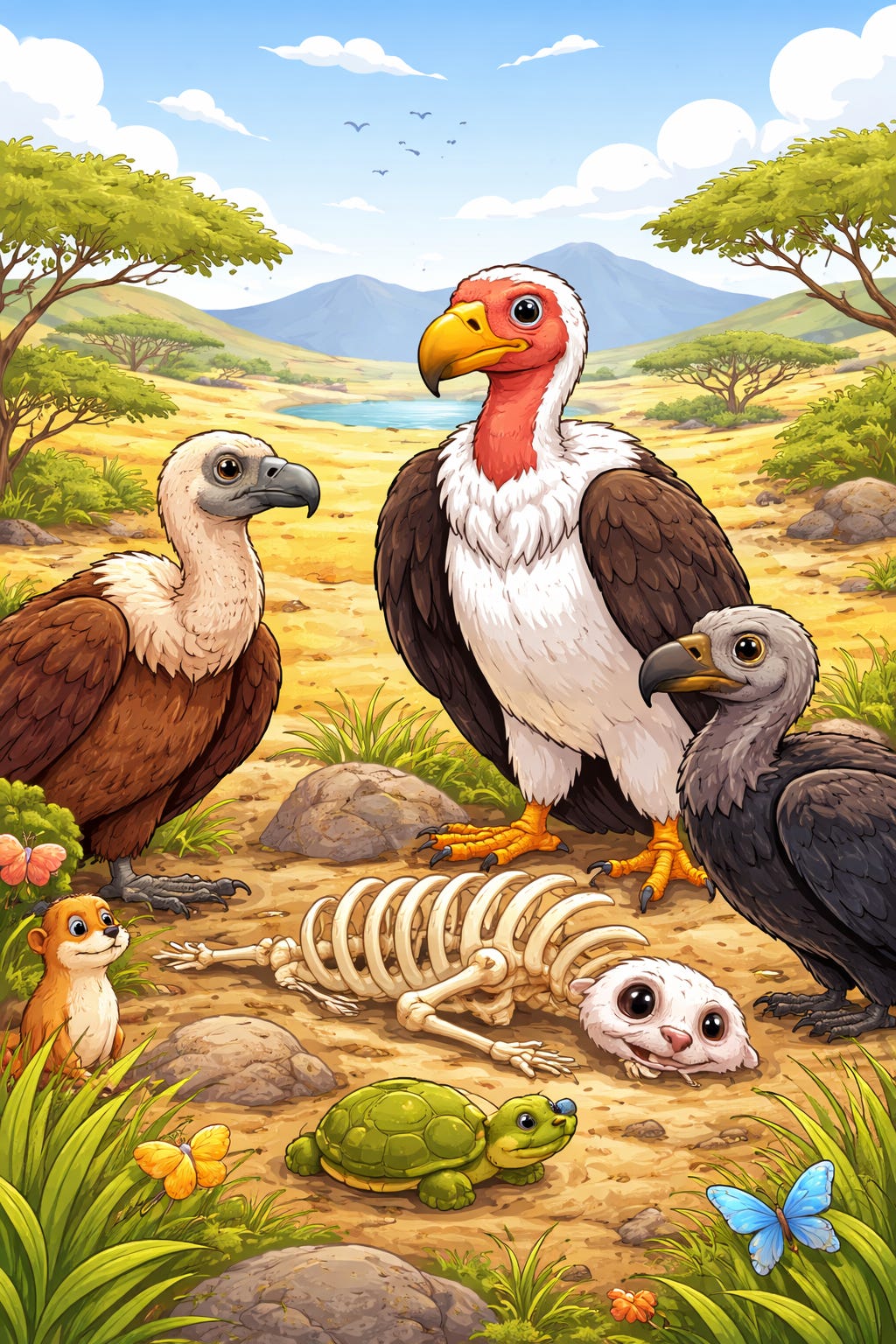
Vultures are amazing birds that often get a bad reputation, but they are actually very helpful to our environment. These large birds are known for eating dead animals, which might sound a little gross—but it’s very important for keeping nature clean and healthy!
Vultures can be found in many parts of the world, including Asia, Africa, and the Americas. Some well-known types are the Indian vulture, the griffon vulture, and the king vulture. They usually live in open areas like grasslands, deserts, and mountains. A group of vultures is called a “committee” or a “wake.”
One special thing about vultures is their strong sense of smell and sharp eyesight. They can spot food from high up in the sky while soaring gracefully with their wide wings. Instead of hunting live animals, vultures mostly eat animals that are already dead. This helps stop the spread of dangerous diseases and keeps the environment clean.
You might notice that vultures often have bald heads. This is not because they are old—it actually helps them stay clean while eating! Without feathers on their heads, it’s easier to avoid germs sticking to them.
Vultures are also incredible flyers. They use warm air currents, called thermals, to glide high in the sky without flapping their wings much. This helps them save energy while searching for food.
Sadly, vultures are in danger in many places, especially in India. Chemicals and pollution have harmed their population. Protecting vultures is very important because without them, dead animals would pile up and spread diseases.
Fun Facts About Vultures
Super Stomachs: A vulture’s stomach acid is stronger than car battery acid! This allows them to eat rotten meat filled with germs (like anthrax or botulism) that would kill other animals. They literally “eat” diseases so we don’t get sick.
Peeing for AC: Vultures have a weird way of cooling down—they poop/pee on their own legs! Since it’s liquid, it evaporates and cools them off (like sweat), and the acid in it kills any bacteria they stepped on while eating.
The “V” Shape: You can spot a Turkey Vulture in the sky because it flies with its wings in a “V” shape and “wobbles” back and forth like it’s practicing its balance.
Defense Vomit: If a predator scares a vulture, it might throw up its dinner. This makes the vulture lighter so it can fly away faster, and the smell is so bad the predator usually leaves!