

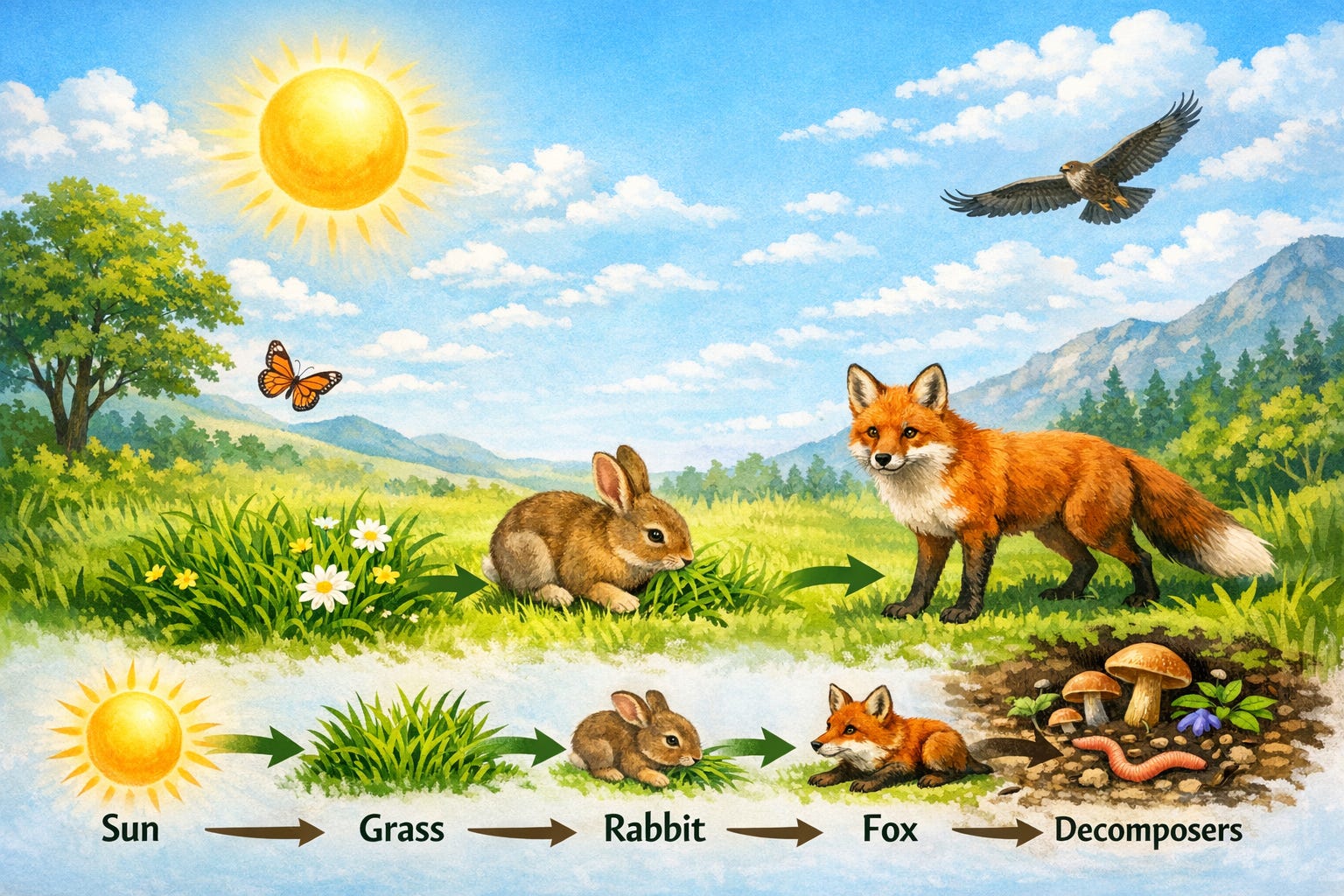
Have you ever wondered how animals get their food? Or how everything in nature is connected? The answer lies in something called a food chain!
A food chain shows how energy moves from one living thing to another. It tells us who eats whom in nature. Every plant and animal is part of this important system.
It All Begins with the Sun
The Sun is the main source of energy for life on Earth. Plants use sunlight to make their own food through a process called photosynthesis. Because plants make their own food, they are called producers.
Examples of producers:
Grass
Trees
Plants
Algae
Without plants, life on Earth would not survive!
The Plant Eaters
Animals that eat plants are called herbivores. They are also known as primary consumers because they eat producers.
Examples:
Rabbit
Deer
Goat
Grasshopper
These animals get energy from the plants they eat.
The Meat Eaters
Animals that eat other animals are called carnivores. Some animals eat both plants and animals; they are called omnivores.
Examples:
Frog eats insects
Snake eats frogs
Lion eats deer
Humans eat both plants and animals
These animals are called secondary or tertiary consumers, depending on their position in the chain.
A Simple Example of a Food Chain
🌞 Sun → 🌿 Grass → 🐇 Rabbit → 🦊 Fox
The grass makes food using sunlight.
The rabbit eats the grass.
The fox eats the rabbit.This is how energy flows step by step.
Nature’s Clean-Up Crew
When plants and animals die, decomposers like mushrooms, bacteria, and earthworms break them down. They return nutrients to the soil so new plants can grow.
This keeps nature clean and balanced!
Food chains help keep nature balanced. If one part of the chain disappears, other parts may suffer. For example, if there are no rabbits, foxes may not have enough food.
Everything in nature is connected like a big web!
Nature works like a team where everyone has a role. The next time you see a plant or animal, remember — it is part of an amazing food chain!