

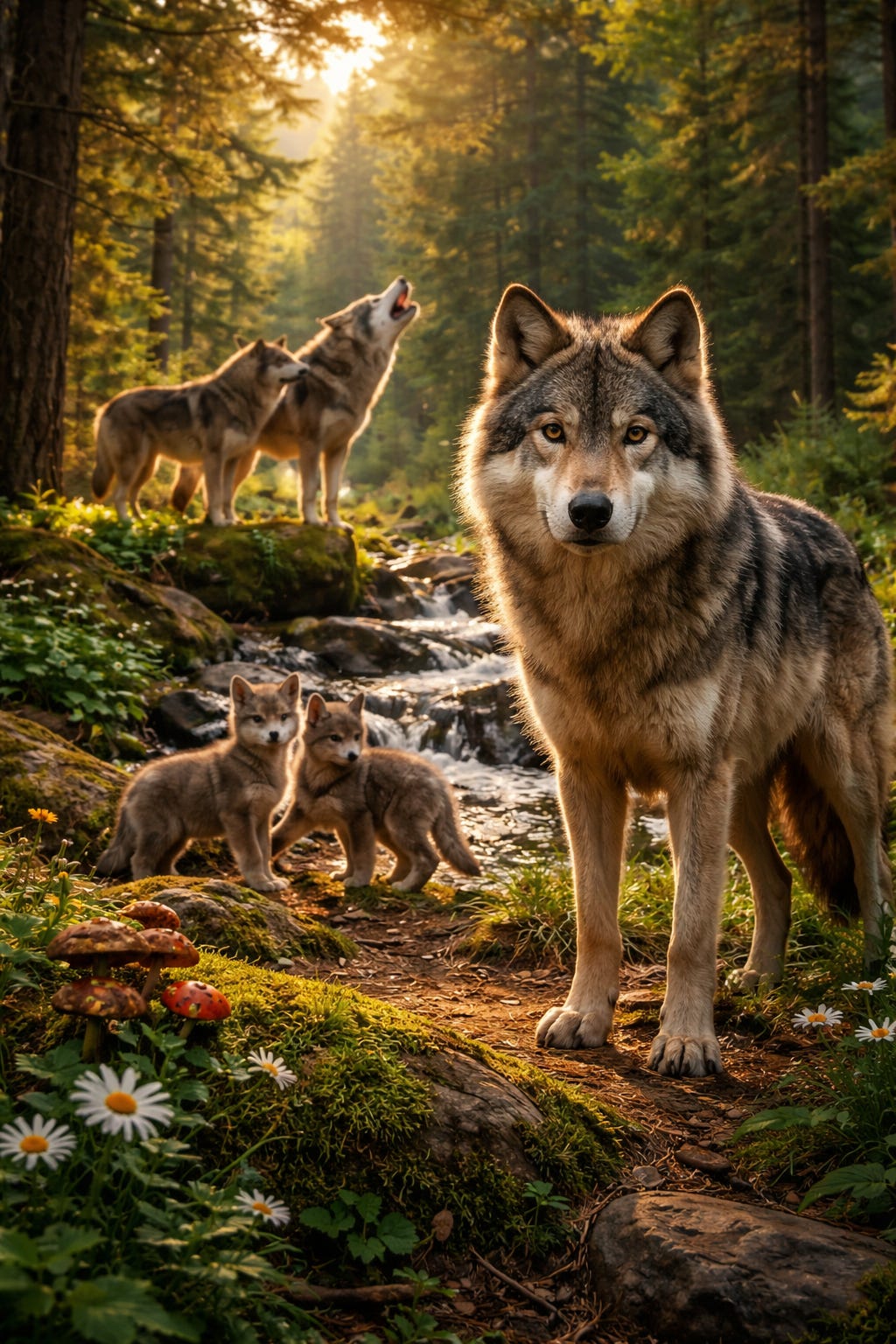
Wolves are powerful and fascinating animals that live in the wild. They are known for their intelligence, teamwork, and strong family bonds. Wolves belong to the dog family, which means they are related to pet dogs, foxes, and coyotes. However, wolves are wild animals and survive on their own in nature.
Where Do Wolves Live?
Wolves are found in many parts of the world, especially in North America, Europe, and Asia. They can live in a variety of habitats such as forests, mountains, grasslands, and even icy Arctic regions. Different types of wolves are adapted to different environments. For example, Arctic wolves have thick white fur that helps them blend into snowy surroundings and stay warm in freezing temperatures.
Wolves are very adaptable animals. This means they can survive in many different conditions as long as they have enough food and space to roam.
What Do Wolves Look Like?
Wolves look like large, strong dogs, but they have some special features that make them different. They have long legs, large paws, and a strong body built for running and hunting. Their ears are pointed, and their eyes are usually yellow or amber in color.
Their fur is thick and helps protect them from harsh weather. Wolves can have different fur colors such as grey, white, black, or brown. Some wolves even have a mix of these colors, which helps them blend into their environment and stay hidden from prey.
Life in a Pack
Wolves are very social animals and live in groups called packs. A pack is like a family, usually made up of parents and their young ones, called pups. Sometimes, older siblings also stay in the pack to help take care of the younger wolves.
Each pack has a leader, often called the alpha, who helps guide the group. Wolves work together in everything they do—hunting, protecting their territory, and raising their pups. This teamwork is one of the reasons wolves are such successful animals in the wild.
What Do Wolves Eat?
Wolves are carnivores, which means they eat meat. Their diet mainly includes animals like deer, elk, and moose. They also hunt smaller animals such as rabbits, birds, and rodents when larger prey is not available.
Wolves are excellent hunters. They use teamwork to chase and tire out their prey before catching it. They can run long distances without getting tired, which helps them during hunts. After a successful hunt, the whole pack shares the food.
Wolves are famous for their haunting and beautiful howls. They howl to communicate with each other over long distances. A wolf’s howl can travel many kilometers!
Howling helps wolves:
Find their pack members
Warn other packs to stay away from their territory
Communicate their location
Each wolf has its own unique howl, just like humans have different voices. Sometimes, when wolves howl together, it sounds like a chorus in the wild!
How Do Wolves Raise Their Young?
Baby wolves are called pups. They are born in dens, which are safe shelters made in the ground or among rocks. When pups are born, they are blind and completely dependent on their parents.
Both the mother and father take care of the pups, and sometimes other pack members help too. As the pups grow, they learn how to hunt and survive by watching and playing with older wolves.
Amazing Facts About Wolves
Wolves are truly incredible animals! They can run up to 60 km/h when chasing prey. Their sense of smell is very powerful and helps them track animals from far away. Wolves can travel dozens of kilometers in a single day while searching for food.
They are also very loyal animals and often stay with their pack for life. Even though wolves may seem scary, they usually avoid humans and prefer to stay away from people.